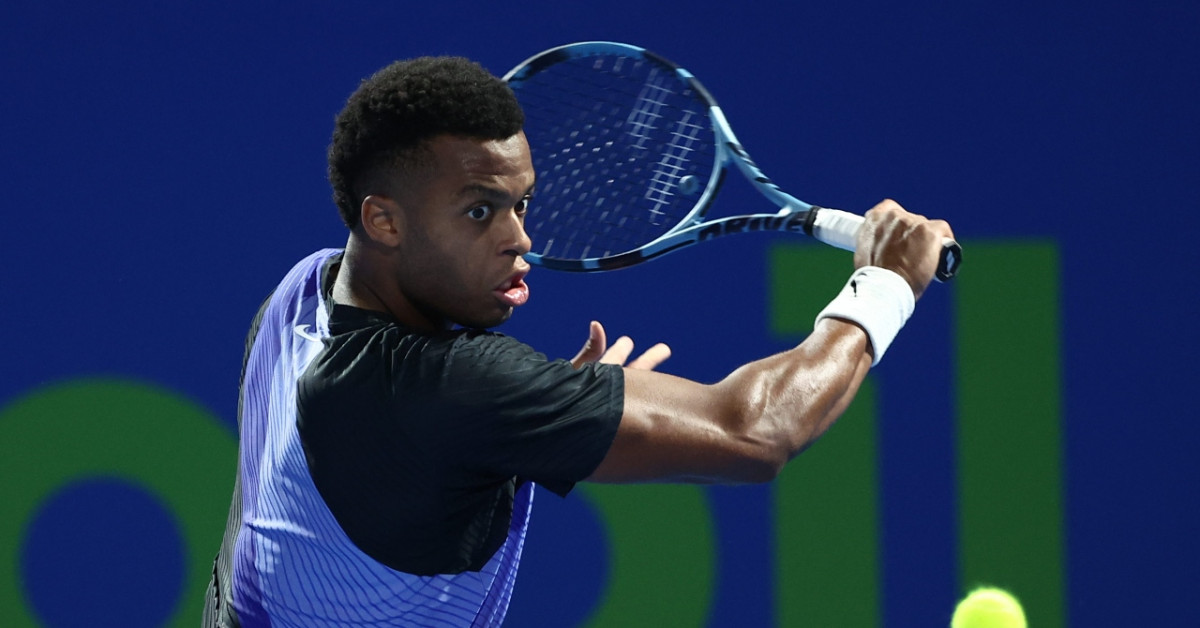
The world of professional tennis is a relentless arena, where moments of triumph are often shadowed by periods of struggle. For French talent Giovanni Mpetshi Perricard, recent weeks have seen a challenging dip in form, marked by early exits from significant tournaments in Doha and, more recently, Roland-Garros. These consecutive défaite Mpetshi Perricard (defeats Mpetshi Perricard) have sparked discussions about the young player's mental fortitude and tactical approach, especially given an otherwise promising trajectory that saw him deliver encouraging quarter-final performances earlier in the season.
Currently ranked 58th in the world, Mpetshi Perricard possesses a formidable serve and an aggressive game style that, when executed well, can trouble any opponent. However, the recurring theme from his recent losses points to a struggle with consistency, composure, and capitalizing on crucial moments. Let's delve into the details of his recent eliminations and explore what lessons can be drawn from this challenging patch.
A Troubling Streak: The Doha Disappointment
The ATP 500 tournament in Doha presented an opportunity for Giovanni Mpetshi Perricard to build momentum, but it instead extended a concerning pattern. Facing Belgium's Zizou Bergs in the first round, Mpetshi Perricard succumbed to a three-set defeat (6-3, 6-7 [5], 6-4) after a battle lasting two hours and fifteen minutes. This loss marked his fifth consecutive defeat and, perhaps more tellingly, his fourth consecutive first-round exit at a main tour event. The statistics from the match painted a clear picture of Bergs' dominance, particularly on serve, with the Belgian firing down 17 aces compared to Mpetshi Perricard's 7, ultimately clinching the first set.
The Frenchman, however, showed glimpses of his potential. Demonstrating greater mobility and resolve, he fought back to claim the second set in a tie-break, turning a somewhat irregular but fiercely contested duel in his favor. This moment of resurgence hinted at the fight within Mpetshi Perricard, a quality that has previously served him well. Yet, the final set saw Bergs reassert his authority, proving more solid and composed in the decisive moments to close out the match. This pattern – an initial struggle, a flash of brilliance, and then a fall – has been a hallmark of Mpetshi Perricard's recent performances, preventing him from converting encouraging starts to his season, like his quarter-final runs in Brisbane and Auckland, into sustained success.
The défaite Mpetshi Perricard in Doha highlighted a critical area for improvement: maintaining a consistent level throughout an entire match, especially against opponents who can absorb pressure and respond with precision. While his powerful game offers immense potential, harnessing that power with strategic consistency remains a key challenge.
Roland-Garros Heartbreak: A Missed Opportunity on Home Soil
The French Open, Roland-Garros, on home soil, was meant to be a stage for Giovanni Mpetshi Perricard to shine. Instead, his second-round encounter against Bosnian Damir Dzumhur turned into a frustrating testament to unfulfilled potential and self-sabotage. Seeded 31st, Mpetshi Perricard was unable to capitalize on a golden opportunity, falling to Dzumhur in four sets (7-6 [7-4], 6-3, 4-6, 6-4).
What made this particular défaite Mpetshi Perricard even more agonizing was the circumstances surrounding it. Dzumhur, ranked 67th, suffered a knee injury early in the fourth set, appearing to be on the verge of retirement. The crowd on Court Suzanne-Lenglen, urging Mpetshi Perricard with cries of "Allez Giovanni, c’est chez toi ici!", desperately hoped for a display of pugnacious character. However, the Frenchman seemed "désabusé et peu serein" (disillusioned and not very calm or confident) on his strokes, failing to seize the moment. His brief revolt, which saw him snatch the third set after losing the first two, was unfortunately interrupted by Dzumhur's medical timeout, breaking his momentum.
Even visibly limping between points, Dzumhur maintained remarkable mobility and precision, especially for someone in distress. His ability to finish the job he started was a stark contrast to Mpetshi Perricard's performance. Post-match, Mpetshi Perricard candidly admitted, "What we remember is that I lost, and even if there was this incident, I wasn't very good." This self-assessment pointed directly to the root of his problems: an alarming number of unforced errors. Dzumhur, despite his physical disadvantage, committed only 10 unforced errors in the first three sets and 13 in the fourth. Mpetshi Perricard, on the other hand, was "continuellement plombé par ses très nombreuses erreurs" (continually weighed down by his numerous errors), tallying a staggering 55 unforced errors in total. He further confessed, "Today, 90% of the time, to be kind, it still wasn't good."
Despite possessing a significant power advantage on serve (averaging 200 km/h compared to Dzumhur's 163 km/h), Mpetshi Perricard often "s’est souvent sabordé" (often sabotaged himself). He squandered crucial break point opportunities with direct errors and failed to protect his own serve when Dzumhur, seeking solutions from his box, managed to find ways to return the Frenchman's powerful deliveries. This inability to convert potential advantages into concrete gains ultimately sealed his fate and prevented a highly anticipated third-round clash with Carlos Alcaraz.
The Psychological Toll and Path Forward
The consistent pattern of défaite Mpetshi Perricard points towards a confluence of technical and psychological challenges. The visible signs of disillusionment and lack of serenity suggest a player grappling with immense pressure, perhaps compounded by high expectations, especially at a Grand Slam on home turf. Losing tight matches, failing to close out sets, and squandering opportunities can chip away at a player's confidence, creating a vicious cycle where errors breed more errors, and hesitation replaces decisive action.
For Mpetshi Perricard, the path forward must involve a multifaceted approach. Firstly, a deep dive into technical fundamentals to reduce the unforced error count is crucial. While power is a weapon, control and consistency are its essential complements. This might involve extensive training on shot selection, rally tolerance, and maintaining depth. Secondly, and arguably more importantly, is the psychological aspect. Working with a sports psychologist could help Mpetshi Perricard develop strategies for managing match pressure, staying present in critical moments, and bouncing back from mistakes. Cultivating a more positive internal dialogue and focusing on process rather than outcome can be transformative.
Practical Tips for Overcoming a Losing Streak:
- Focus on Process: Shift attention from winning or losing to executing specific technical and tactical objectives during each point.
- Identify Small Wins: Celebrate small improvements in practice or during matches, even if the overall result isn't there yet.
- Mental Resilience Training: Practice mindfulness, visualization, and positive self-talk to build mental toughness.
- Review and Adapt: Objectively analyze matches with coaches, identifying patterns of errors and missed opportunities without self-condemnation.
- Build a Strong Support System: Lean on coaches, family, and trusted mentors for emotional and technical support.
- Physical Conditioning: Ensure peak physical fitness to minimize fatigue, which often contributes to mental lapses.
These proactive steps are essential for any athlete facing a string of defeats, and they will be vital for Mpetshi Perricard to turn the tide. Converting his raw talent and power into consistent, match-winning performances will require not just physical prowess but also unwavering mental fortitude.
Giovanni Mpetshi Perricard is undoubtedly a talent with a bright future, but his recent string of defeats in Doha and Roland-Garros underscore the brutal learning curve of professional tennis. The consecutive défaite Mpetshi Perricard are more than just statistics; they are critical lessons. They highlight the need for greater consistency, improved decision-making under pressure, and a stronger mental game to capitalize on crucial opportunities. While the frustration of these exits is palpable, they also present an invaluable opportunity for introspection and growth. With dedicated effort on both the technical and psychological fronts, Mpetshi Perricard has every chance to refine his formidable game, emerge stronger from this challenging period, and fulfill his considerable potential on the ATP Tour.